For Professionals
Join Us
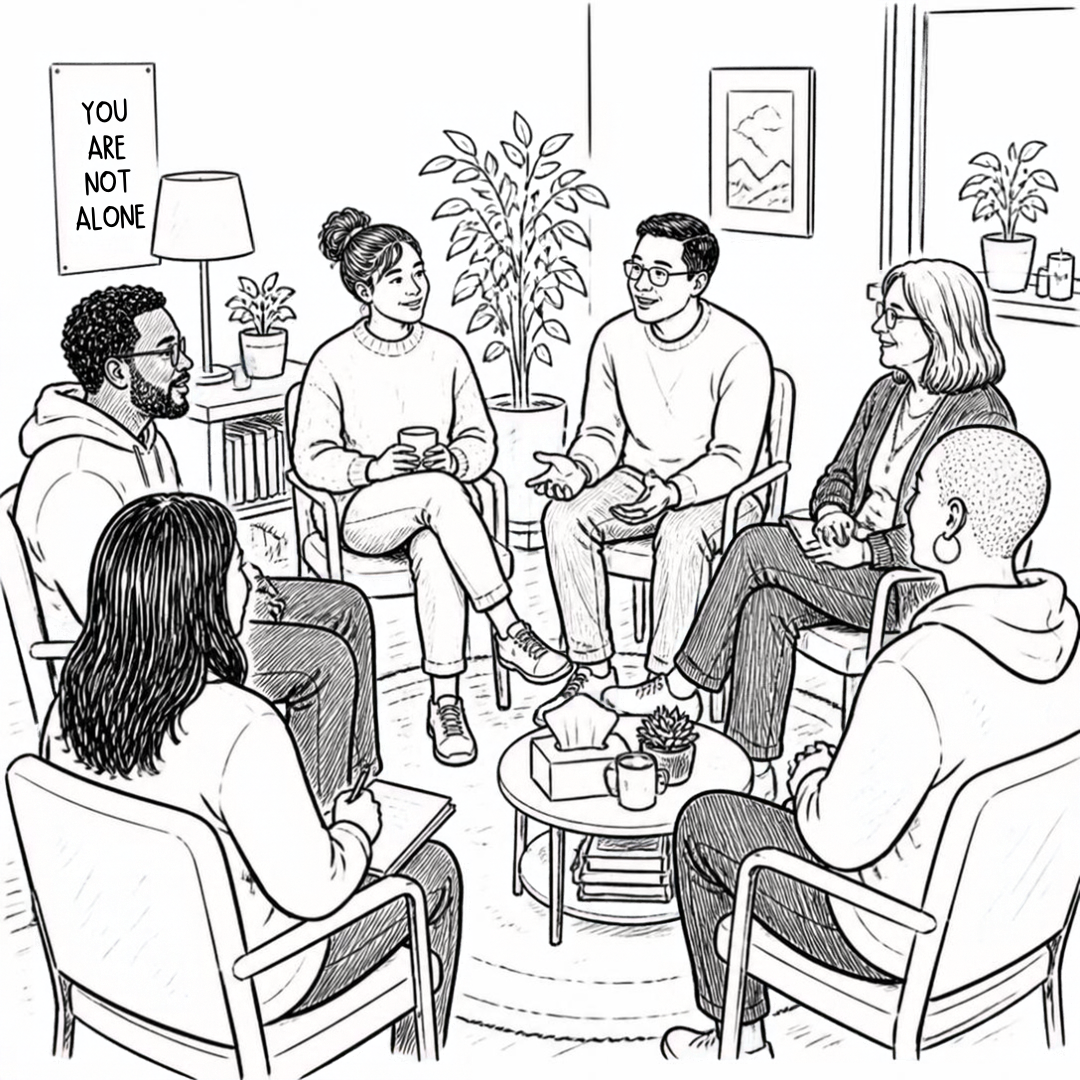
Our monthly support groups can introduce you to a new community in a safe, judgement-free space. Members can provide emotional and practical support, exchange tips and ideas for improved well-being, and share strategies that have worked for them.
- Llanbradach Community Centre, Morgan Street, Llanbradach, Caerphilly CF83 3LW
1st Wednesday of Each Month
- 1.00-2.30pm
If you would like to come along or would like more information, please click the button below to send us an email.
Get In Touch

The Benefits of a Support Group
- Discussing hoarding can be difficult, particularly when someone feels worried about how others may respond. A support group offers a private and supportive setting where members can talk honestly about their emotions, concerns, and hopes at their own pace.
Being part of a support group can help people feel understood rather than judged. Sharing experiences with others who have faced similar challenges can ease feelings of shame and loneliness.
- Support groups provide an opportunity to exchange ideas, experiences, and practical approaches. Members, along with the group mentor, can share useful ways of managing anxiety, making decisions about possessions, and developing healthier routines.
- Hoarding can sometimes lead people to withdraw from family, friends, and wider social life. Connecting with others in a support group can help rebuild a sense of community and provide reassurance that no one has to face these challenges completely alone.
- Progress with hoarding behaviours can take time, and having encouragement can make a meaningful difference. Hearing about other members' achievements can provide motivation, while the group can also offer reassurance and support when things feel difficult.

Support Groups Around the UK
Our colleagues at HoardingUK Charity have compiled a list of the support groups available around the country.
Take A Look
Support Is Available
You don't have to face hoarding difficulties alone. There are various forms of support available, and finding the right help can be an important first step towards making positive changes.

Make A Referral
One-to-one support in Newport, Caerphilly, Monmouthshire and Blaenau Gwent
Find Out More
How To Access Support
Information on supportive services within Wales and the rest of the UK.
Find Out More
Support Groups
Information on support groups within Wales and the rest of the UK.
Find Out More