
Hoarding Taskforce On The Go Guide
A practical guide to support practitioners in safely assessing and working within hoarded environments, balancing immediate risk management with person-centred care.
The Hoarding Taskforce Best Practice Principles:
Harm Reduction Focused:
Prioritising immediate and ongoing safety, working in realistic steps that reduce risk over time rather than expecting rapid change.
Long-term and consistent:
Building trust through continuity, clear communication, and sustained engagement rather than short-term or one-off interventions.
Trauma-informed:
Recognising that behaviours may be rooted in past experiences, and ensuring practice promotes safety, choice, collaboration, and avoids re-traumatisation.
Person-centred:
Keeping the individual’s voice, preferences, and emotional wellbeing at the centre of all decision-making and support.
Multi-agency:
Bringing together relevant agencies to share expertise, coordinate actions, and deliver a consistent, joined-up response without conflicting advice.
Why is a coordinated approach important?
Hoarding disorder… represents a substantial public health and social problem, requiring an effective multi-agency response.”
— Kaminskiy et al. (2025)
A multi-agency approach is essential in hoarding support as it enables a holistic response that addresses the psychological, practical, and social aspects of the situation. This joined-up approach supports more sustainable outcomes by developing long-term strategies that meet the individual’s needs while reducing risk and promoting stability.
Hoarding disorder is not about possessions, but about distress, attachment, and perceived safety. Effective response begins with understanding, not removal.
What is Hoarding Disorder?
Hoarding disorder is a recognised mental health condition, recognised by both the Diagnostic and Statistical Manual of Mental Disorders (DSM-5) and the World Health Organisation (WHO).
It is characterised by persistent difficulty discarding possessions, regardless of their actual value, which can lead to significant clutter and impairment in living spaces.
Hoarding is not simply a lifestyle choice or a matter of untidiness; it is often a complex response to underlying emotional, psychological, or life experiences such as trauma, loss, anxiety, or deprivation.
- Survival – People may keep items because they fear future scarcity or believe the objects could be needed later for security, comfort or survival.
- Control – Possessions can provide a sense of stability and personal control, especially when other areas of life feel unpredictable or stressful.
- Safety – Items and clutter may create emotional comfort or a feeling of protection, making it hard to let things go without anxiety.
- Memories – Objects can hold strong sentimental value and may feel tied to important people, experiences, or parts of a person’s identity.
- Executive function – Difficulties with planning, organising, prioritising and decision-making can make it overwhelming to sort through and discard belongings.
When entering a clients home, what should we be assessing?
Restricted access/cluttered pathways – Focus on maintaining safe entry, exit and movement through the property. Identify blocked doorways, stairs or escape routes that could prevent emergency access or evacuation.
Fire loading and ignition risk accumulation – Assess the build-up of combustible materials near heat sources, overloaded sockets, cooking areas, or smoking materials, as these can significantly increase fire risk and fire spread.
Consider immediate hazards – Prioritise urgent health and safety concerns such as infestations, human or animal waste, mould, spoiled food, sharps, or structural risks that may require immediate intervention.
Indicators of diminished capacity or isolation – Be aware of signs the individual may be struggling to manage daily living, decision-making, self-care or social connection, as this can increase vulnerability and reduce engagement with support services.
Always Remember..
While addressing physical safety risks is essential, practitioners should also prioritise the clients emotional wellbeing throughout the process.
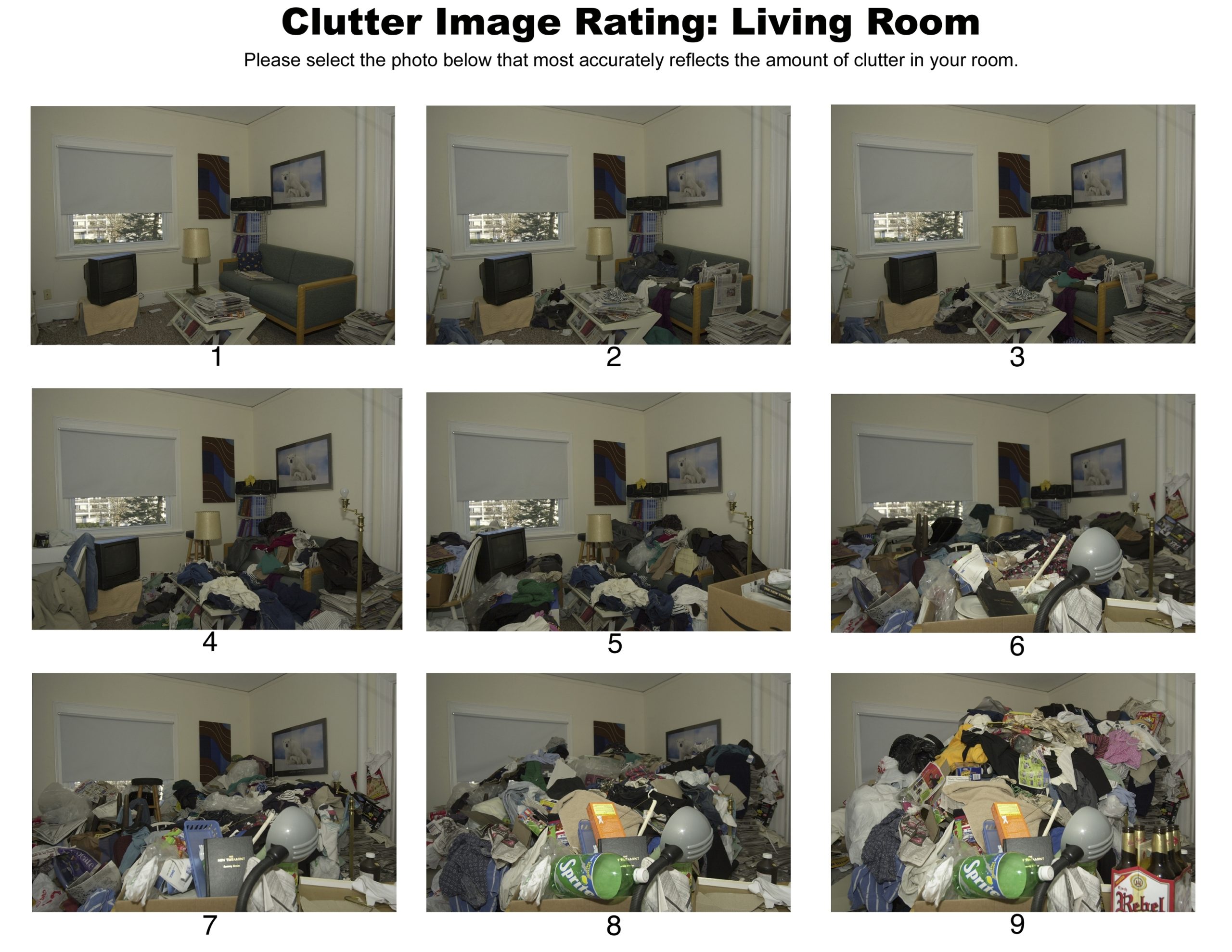
Clutter Image Rating Scale: To help get identify the level of severity in a hoarded home, use the Clutter Image Rating Scale which is a a series of pictures of rooms in various, from completely clutter-free to very severely cluttered.
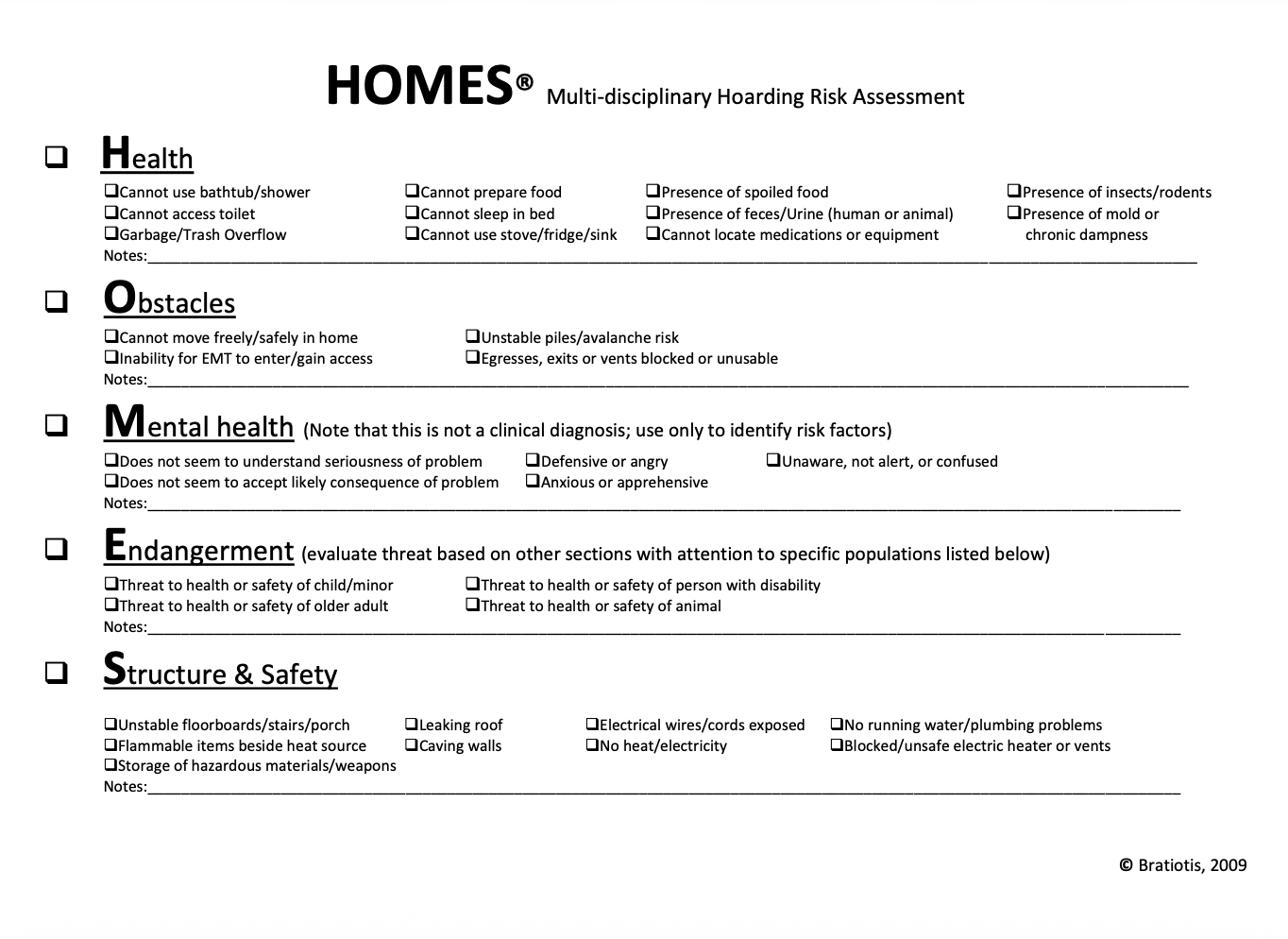
H.O.M.E.S Scale: The HOMES Multi-disciplinary Hoarding Risk Assessment provides a structural measure through which the level of risk in a hoarded environment can be conceptualised.
Concerns about children in the home?
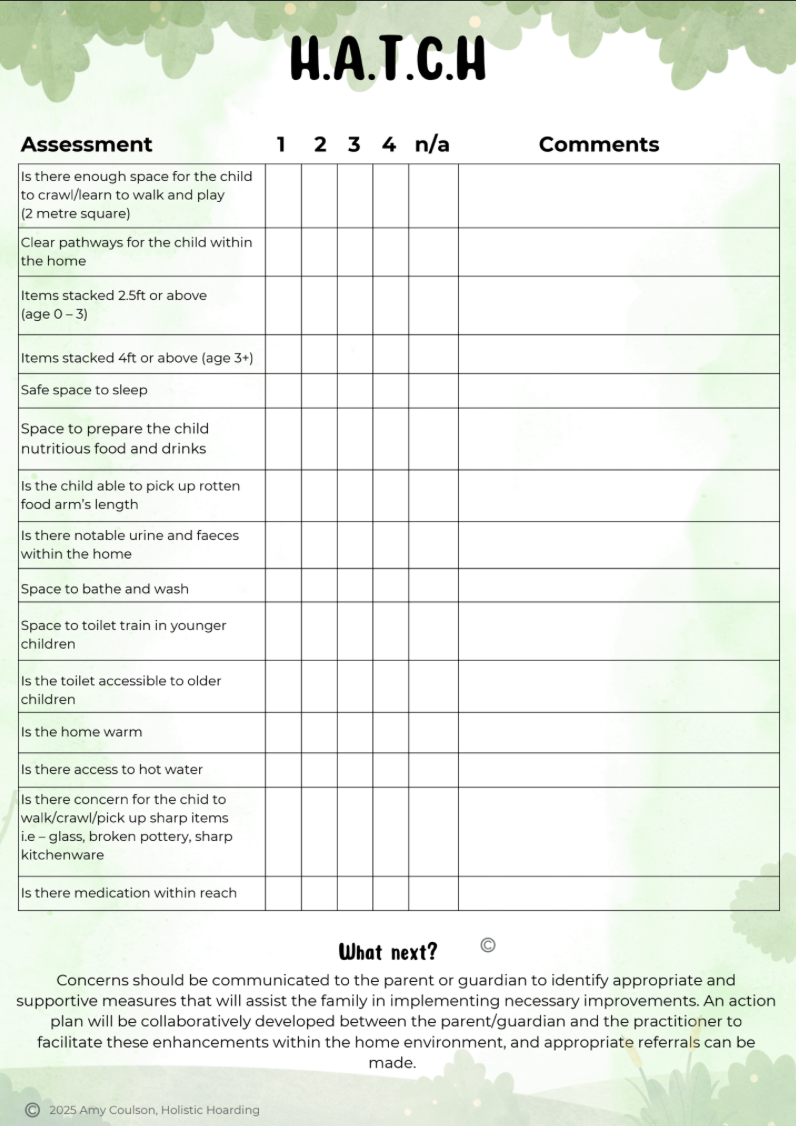
The Hoarding Assessment Tool in Children’s Homes(H.A.T.C.H) has been developed in partnership with parents who have hoarding tendencies and practitioners experienced in supporting families. Its purpose is to help identify situations where hoarding behaviours may be creating unsafe or unsuitable living conditions for children. By recognising concerns early, practitioners and families can work together to improve home environments and promote children’s safety and well-being.
The HATCH tool should be considered when:
- There are concerns about hoarding tendencies within the home.
- A child lives with a parent or primary caregiver who displays hoarding behaviours.
- Home conditions may be affecting the child’s safety, comfort, daily routines, or emotional well-being.
The HATCH assessment is designed to be completed collaboratively with families, supporting openness and shared understanding.
- Consent from parents or caregivers should always be sought before beginning the assessment.
- All questions are phrased positively to reduce anxiety and to encourage constructive, supportive conversations.
- Practitioners should approach the assessment with sensitivity, reassurance, and a focus on supporting, not judging, the family.
If consent cannot be obtained, practitioners should record the reasons and circumstances clearly.